Subterranean termite infestations in Baltimore require structural containment strategies customized to the city's distinct geological and architectural characteristics. In historic rowhouse neighborhoods like Fells…
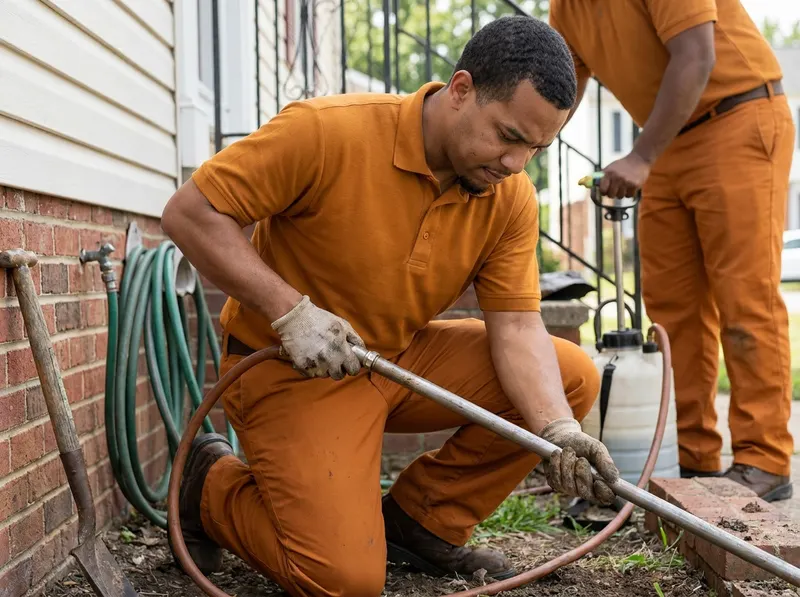
Subterranean termite infestations in Baltimore require structural containment strategies customized to the city's distinct geological and architectural characteristics. In historic rowhouse neighborhoods like Fells Point, Federal Hill, and Mount Vernon, high-density brick structures share continuous party walls and sit atop rubble-stone or early brick foundations. Subterranean termites leverage subterranean moisture pockets along the Patapsco River basin, ascending hidden mortar voids and stone fissures to consume floor joists from the inside out. In upland neighborhoods like Hampden, Charles Village, and Roland Park, varying soil moisture and expansive clay substrates require deep-trench liquid delivery to prevent subterranean colonies from bypassing shallow perimeter treatments.
Establishing a fortified soil barrier delivers immediate structural advantages over standalone bait systems. While baiting stations require foraging worker termites to discover monitoring traps over weeks or months, a continuous liquid barrier creates an immediate 360-degree exclusion zone around the entire building footprint. For Baltimore rowhouses in Canton, Brewers Hill, and Locust Point with concrete slab basements or rear brick patios, certified technicians perform micro-drilling through perimeter masonry joints and concrete slabs to inject non-repellent termiticide directly into subterranean soil strata. This method seals off hidden entry points around plumbing rough-ins, utility conduit entries, and foundation cold joints.
Structural safety and environmental protection govern every soil barrier application. Modern non-repellent active ingredients bond firmly with local Maryland clay and loam particles, preventing wash-off or lateral migration toward storm drains and urban waterways near the Inner Harbor. Once backfilled and settled beneath the topsoil surface, the chemical zone remains completely imperceptible to subterranean termites while generating zero surface vapor, allowing families and pets to safely utilize lawn and yard spaces immediately after treated areas dry.
Every job gets a firm, written price after a free on-site visit.
Tell us about your subterranean termite soil barrier defense job in Baltimore and we'll send a clear, written quote — usually the same day.
 Oakstone Pest Defense